Why We Made the Move to Xero
- Feb 6
- 4 min read
Changing software is a bit like changing your favourite café. Even if the coffee’s gone downhill and the chairs are wobbly, there’s still a sense of loyalty, habit, and “but I’ve always come here”.
That’s pretty much how we felt about QuickBooks.
We’d used it for a long time. We liked it. It did a lot of things well. And if I’m being honest, I was genuinely a bit sad to leave it behind. But over time, it became clear that it just wasn’t meeting our needs anymore or, more importantly, our clients’ needs. So we made the move to Xero. And a few months in, I can say with confidence: it’s been the right decision.
This isn’t a sales pitch. It’s just the honest story of why we switched, what we were struggling with before, and what’s working better now.
When “good enough” stops being good enough
For a long time, QuickBooks did the job. But as our practice grew and the way our clients work evolved, a couple of cracks started to show.
Two things, in particular, became recurring frustrations:
Easy, reliable tax filing
Reliability of functions within the software
These might sound like small things, but in day-to-day bookkeeping, they’re not small at all. They’re the difference between a smooth process and a constant stream of “why hasn’t this synced?”, “where’s that receipt gone?”, and “why is this taking longer than it should?”
When software starts getting in the way of the work, rather than supporting it, that’s usually a sign it’s time to reassess.
The turning point
There wasn’t one big dramatic moment. No desk-flipping. No “that’s it, we’re done”.
It was more a slow realisation that:
We were spending more time fixing issues than we should
Some features weren’t as reliable as we needed them to be
Simple processes weren’t always as simple as they should be
And that, for us and our clients, there might be a better fit elsewhere
We started looking at Xero more seriously and what stood out straight away was reliability and flow. Things just… worked. The kind of boring, unglamorous “works as it should” that actually makes a huge difference in practice.
The move to Xero (spoiler: it wasn’t painful)
One of the biggest worries with any software change is disruption. No one wants weeks of chaos, missing data, or confused clients. Happily, the move itself was far easier than expected. The transition was smooth, the setup was straightforward, and day-to-day work settled into a rhythm very quickly. That alone was a relief and a good sign we’d made the right call.
What’s working better now
Without turning this into a feature list, there are a few areas where Xero has made a noticeable difference to how we work and how our clients experience their bookkeeping and it's not just how easy menus are to navigate.
1. Bank feeds that just get on with it
Reliable bank feeds are one of those things you only really notice when they aren’t reliable.
With Xero, the feeds have been consistent and stable, which means:
Less manual checking
Fewer gaps
Less time spent fixing or re-importing data
More confidence in the numbers
That’s good for us and even better for clients who want up-to-date figures without surprises.
2. Invoicing and getting paid
Xero’s invoicing is clean, simple, and practical. More importantly, it supports:
Clear invoices
Easy sending
Automatic reminders
Faster payments
Anything that helps clients get paid more quickly is a win. Cashflow is still one of the biggest stress points for small businesses, and small improvements here can make a big difference.
3. The mobile app (actually useful, not just “nice to have”)
A lot of apps promise convenience. Fewer actually deliver it. Xero’s mobile app has turned out to be genuinely useful for:
Checking figures on the go
Sending invoices
Keeping an eye on the business without needing to log in at a desk
For business owners who don’t live in their accounting software (which is most of them), that kind of accessibility really matters.
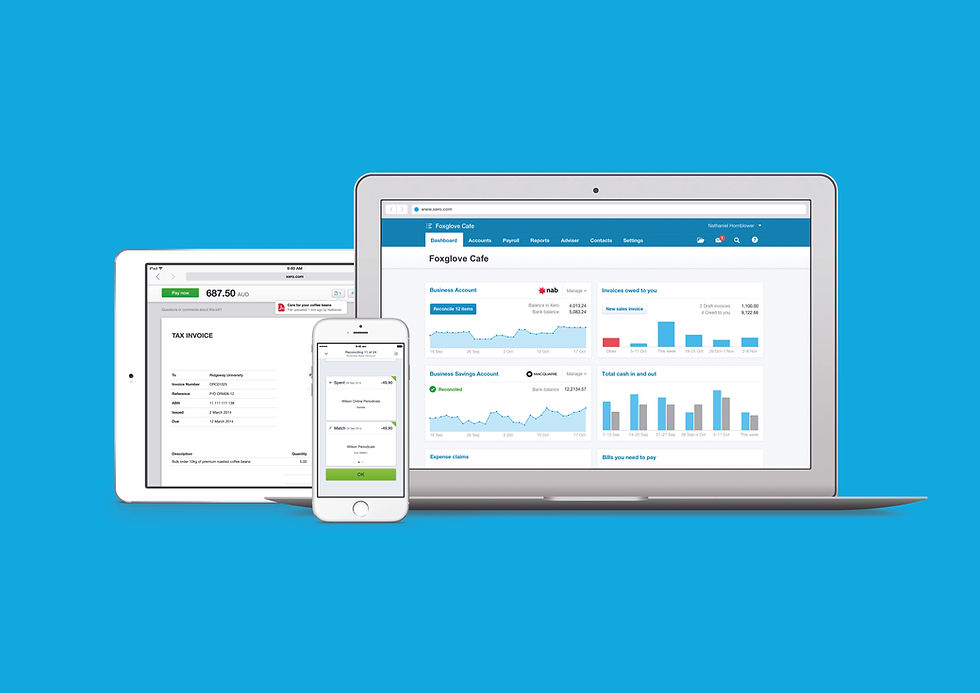
4. A dashboard that tells a clear story
Good reports don’t need to be complicated, they need to be clear.
Xero’s dashboard gives a straightforward snapshot of:
Bank balances
Money coming in
Money going out
What’s overdue
What needs attention
It’s not about drowning people in numbers. It’s about making the important stuff visible, quickly.
5. Integrations that actually fit real businesses
One of Xero’s strengths is how well it plays with other tools. Whether it’s payment systems, ecommerce platforms, or industry-specific apps, the ecosystem around Xero is broad and more importantly, practical. That flexibility makes it easier to build systems around how a business actually works, rather than forcing the business to adapt to the software.
But let’s be honest: leaving QuickBooks wasn’t easy
I did genuinely like QuickBooks. There’s no drama here, no “it was all terrible actually”.
It just stopped being the best fit for us. That’s an important point: Software choices aren’t about loyalty they’re about suitability.
What works brilliantly at one stage of a business (or a practice) doesn’t always work as well at another. Needs change. Expectations change. Processes change. Moving to Xero wasn’t about chasing something shiny and new. It was about choosing a tool that better supports how we and our clients work now.
What this means in practice
Since moving to Xero, we’ve noticed:
Smoother workflows
Fewer “why isn’t this working?” moments
More reliable data
Less friction in everyday tasks
A better experience for clients and for us
None of that is particularly glamorous. In bookkeeping and accounting, reliable is often exactly what you want.
Final thoughts
Changing systems is never just a technical decision, it’s a practical, emotional, and sometimes slightly uncomfortable one too. Especially when you’re leaving something you’ve used for years.
But looking back, the move to Xero has been the right decision for us.
It’s given us:
More reliability
Better day-to-day flow
Tools that fit how we and our clients actually work
And a setup that feels built for now, not just for the past
While I’ll always have a bit of a soft spot for QuickBooks, I’m very happy with where we’ve landed.
Sometimes the right move isn’t about finding something “better” in every abstract way it’s about finding something that works better for you. For us, that’s been Xero.


Comments